








DUBLIN — Ireland’s latest DAB+ trial, operating under the FáilteDAB banner, was conceived as a technical and market test. But as the first phase beds in across Leinster, connected-car data from Xperi’s DTS AutoStage platform is beginning to add a behavioral dimension to the engineering story.
The high-powered multiplex, licensed by Comreg and operated by Foothold Communications, launched in April 2025 with six transmission sites serving the Greater Leinster area. At the launch, Stephen Foley, director of FáilteDAB/Foothold Communications, said, “With 80% of radio listening happening in vehicles, and all cars sold in Ireland since 2021 equipped with DAB+ as standard, the time is right to expand and enhance this technology to reach a wider audience.”
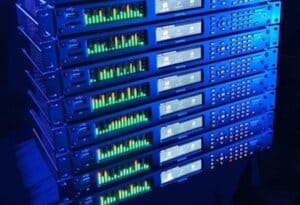
Branded as FáilteDAB Mux 1, the network now carries nearly 30 services and has been designed as a blended SFN/MFN configuration, using equipment from suppliers including GatesAir, Paneda and Telos Omnia. Its remit is to assess technical performance, listener response and industry appetite ahead of any permanent national licensing framework.
However, what has emerged from inside vehicles equipped with DTS AutoStage is evidence that digital listening may already be accelerating.

A digital tipping point in the car
Quoting DTS AutoStage Broadcaster Portal data from Jan.–Feb. 2026, George Cernat, senior director of automotive connected media at Xperi, says that 29.6% of overall listening in DTS AutoStage-equipped vehicles in Ireland is now to DAB+. “This is significant,” Cernat says, “as it clearly shows the potential of the technology once fully embraced and advertised by the radio groups who will be adopting DAB+.” Perhaps more striking is listener behavior where FM and DAB coverage overlap.
According to Cernat, more than 90% of listeners switch to DAB+ when both versions of the same station are available in the car. He attributes that shift not simply to audio quality, but to user-experience design. “DTS AutoStage provides an integrated, consistent discovery platform that defaults to DAB+ when a station broadcasts on both DAB+ and FM,” he says, adding that OEMs have adhered to best-practice guidance in prioritizing DAB+ in the interface when both signals coexist.
In practical terms, this means the migration is frictionless. The listener is not being asked to make a technical choice; the system presents the digital path as the primary route. “Our system has been designed in collaboration with European OEMs to ensure an alphabetized list by market and prioritization of DAB+ tuning where both DAB and FM are available for the same station,” Cernat says. For Irish broadcasters weighing carriage costs during a trial phase, the implication is that prominence inside the dashboard translates into measurable listening.
One-quarter of DAB listening in Irish vehicles equipped with DTS AutoStage is to services that exist only on DAB+, according to Xperi’s data. Cernat frames that as evidence of pent-up demand for choice. “It’s been our mission at Xperi to normalize discovery with DTS AutoStage — every brand and every radio station in the band is given equal prominence, aiding listener discovery and engagement with new content,” he says. “Once users find a station they like, they stay with it, which means demand exists for more content and variety. DAB+ technology can deliver additional channels of content, and this is something to be embraced.”
In a market long dominated by FM incumbents and with no established national DAB ecosystem, that level playing field may prove consequential. The trial is not simply testing signal propagation. It is testing how digital plurality performs when surfaced cleanly in the car.

Data beyond surveys
Ireland is something of a late mover in DAB+. Cernat does not see that as a disadvantage. “The debate over DAB+ as a viable improvement in broadcast technology in Europe has been settled for quite some time,” he says, pointing to the European Electronic Communications Code requirement that all new cars sold in the EU include digital radio reception. “The technology is there, the demand is there, as we’ve seen, and the conclusions should be obvious to the neutral observer.”
Central to Xperi’s argument is the value of real-world tuning data. Unlike recall-based surveys, DTS AutoStage aggregates anonymized listening intelligence directly from connected dashboards. “The DTS AutoStage Broadcaster Portal addresses what has historically been a major blind spot in the industry — timely feedback is crucial when making technology investments,” Cernat says. “We are happy to collaborate with both broadcasters and industry bodies to shed some light on digital radio adoption.”
For regulators and multiplex operators, that means they can evaluate the trial not only through field-strength maps and service counts, but also through evidence of actual user behavior when listeners access FM, DAB+ and IP seamlessly via a single interface. Cernat emphasizes that coverage parity remains critical. “Coverage parity enables listeners to enjoy their favorite FM stations but in better, digital quality,” he says, noting that DAB+ also enables enhanced visuals such as album artwork and presenter images alongside audio.
FáilteDAB has announced an extension and expansion of the trial network, adding additional high-power transmission sites and broadening its geographic reach beyond the first-phase footprint. The expansion is intended to deepen population coverage and provide a more robust basis for assessing long-term digital planning in Ireland. Foley says, “I am delighted that the DAB+ trial is continuing and expanding to cover more than 85% of the population.”
While the first phase has tested viability, the second phase will test scale. For Xperi, the Irish findings are not isolated. “As we look across the DAB markets, we see very similar user behaviors,” Cernat says, pointing to comparable engagement profiles in other countries where DAB+ services and DTS AutoStage-equipped vehicles coexist.
Looking ahead, he positions DTS AutoStage as part of a broader hybrid future. “DTS AutoStage is a technology with a global footprint,” he says. “We support more than 50,000 stations in over 150 countries. In every market where we operate, we can provide broadcasters with rich analytics demonstrating listening engagement that they can share with regulators and legislative bodies.”
For Ireland, the message emerging from dashboards may prove as influential as the signals radiating from transmitters. If digital listening rises wherever digital coverage and user experience align, the FáilteDAB trial could mark more than a technical milestone; it could herald a behavioral turning point in the Irish radio landscape.
This story originally appeared in the March/April 2026 edition of RedTech Magazine. You can read or download it for free here.
You can access all past RedTech publications, for free, here.
These stories might interest you
Radiodays Europe calls for collaboration on audio’s future
Digital radio audience equals FM in south of Belgium
Guest commentary: Digital radio — Dual standards not double standards