







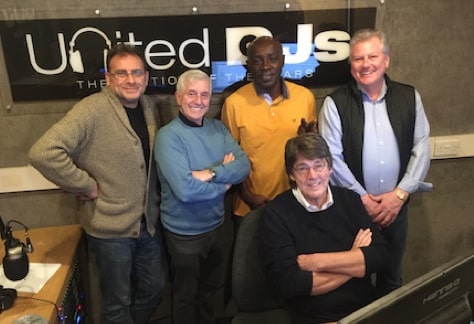

Tony Prince began his career as a DJ on Radio Caroline and Radio Luxembourg in the 1960s and 1970s. He later became a program director and businessman, establishing the remix label DMC and founding radio station United DJs. We spoke to Prince about the changes in radio over the years, specific issues facing the industry, and how he sees the medium moving forward.
RedTech: Tell us a bit about your journey and how you got started in radio.
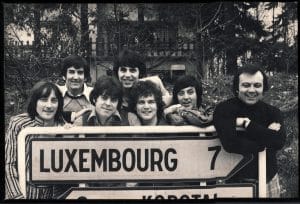
Tony Prince: I was a singer in “The Jasons,” a Manchester band around 1961–1962. The band wouldn’t turn pro so I joined a 15-piece big band at the newly opened Oldham Astoria (we called them dancehalls in those days). One day the DJ — who was very square looking — didn’t arrive and they asked me to play the records when the band had a break.
Top Rank, a company that together with Mecca had many venues across the United Kingdom, realized people wanted to hear records not a trio doing cover versions. I became Top Rank’s first fulltime DJ. Then they moved us to their new showpiece venue “The Top Rank Bristol.”
There I sang, played the guitar and then the stage would revolve and my two decks would pop up. As the band finished, the audience filled the floor and I delivered the hits of the day. When I was done they actually booed the band’s return.
One day the Musicians Union came to see us to ensure our deal with Top Rank was ok. When the MU secretary found out I was working six nights a week and weekday lunchtime sessions, three shows on Saturday, he said he didn’t think I was being paid enough.
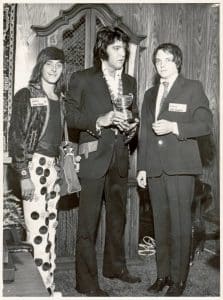
A week later he sent me a letter saying I was breaking Union Rules (that we needed to “keep music live”). As a result, during a union meeting, 100 musicians voted me out of the union. That’s when I became a full time DJ and I loved it. Top Rank gave me a big pay raise.
Then I got a spot on a weekly TV show produced in Bristol, “Discs-a-Gogo” where I introduced all the hot groups and singers from Paul Simon, Cher, Tom Jones to the Yardbirds and Small Faces. If they were on the charts they were on Gogo. I also helped the producer select the bands. One day I received a record by someone I wanted to meet and persuaded the producer to book Tony Blackburn. I had read about him and Radio Caroline in NME but we couldn’t receive the ship’s signal in the West Country.
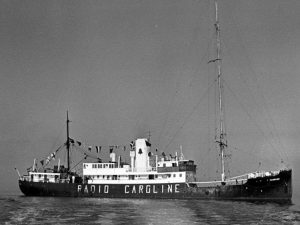
Tony introduced me to the Radio Caroline program director and when the TV show ended I joined the pirate ship gang, first on Caroline South and then for a glorious year and a half on Caroline North anchored off the Isle of Man.
When the government made pirates illegal I joined Radio Luxembourg for 16 years. For the final seven I worked as the program director.
Evolution
RT: How has the radio industry and the role of radio host changed since you started your career?
Prince: Mainstream Radio has lost the plot. DJs are trained to say little, play so many jingles and stick to a tight playlist of predictable hits. I was on Capital Gold with Kenny Everett, Mike Read, Kid Jensen and all my colleagues from the glory days.
They gave me the breakfast show on Global’s XTRA AM in Birmingham. The playlist drove me nuts. I’d launched DMC (the world’s first DJ-only music mixing organization and Mixmag (which became the “bible” for dance music) on Feb. 1, 1983 and was extremely busy with that. After nine months I asked Richard Parks to let me out of my contract. I had lost my spirit for radio.
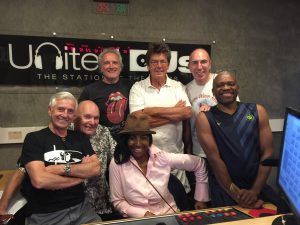
RT: In 2018 you launched streaming radio station United DJs. It’s also available on DAB in Portsmouth and Norwich, England. What inspired you to create this initiative?
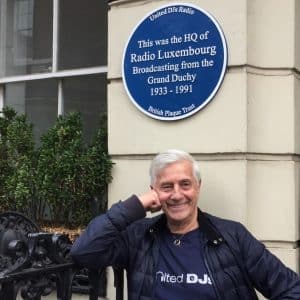
Prince: Mainly it was due to dissatisfaction among my colleagues. They urged me to do something for two years. Finally, on April 2, 2017 I went back to radio guns blazing, creating United DJs. The main difference was streaming and understanding that for the first time a radio station could be heard absolutely anywhere in the world.
Naturally I wanted the world to listen, an influence from my days with 208 Radio Luxembourg, where we attracted an international audience to our static filled signal on AM (we called it the medium wave). We targeted the U.K. but also pulled in listeners from throughout Europe and Scandinavia. Kids in the Eastern Bloc taught themselves English so they could understand what we said and the meaning of the song lyrics. I believe this caused the Berlin Wall to eventually come down. They dismantled the bricks as the revolution evolved, expressing their frustration as teenagers while they listened to “Luxy.”
They knew there was a party going on in the West! I co-wrote my book “The Royal Ruler & the Railway DJ,” which is about my radio antics and the grey world of a “wanna-be” DJ (Jan Sestak), a devout Radio Luxembourg listener, who I had met when I became the only radio DJ to tour Czechoslovakia. That experience was so moving and I wanted my book to reflect the extremes kids are willing to go to in order to get in touch with music.
Global Reach
RT: Who are the listeners of United DJs? Where are they located?
Prince: Everywhere. Obviously a majority is in the U.K. and greater Europe. But through Facebook we correspond with every corner of the globe, Scandinavia has gone wild for our station and we hear from listeners in Australia, Argentina, Nigeria…everywhere. We have DJ’s on our team broadcasting from America, Canada, Thailand, Barbados, South Africa, Nigeria and Malta. In America we have Rosko in Los Angeles, Max McGill in Ohio and Freddie Cannon in Nashville.
How many DJs are involved in United DJs?
Prince: We currently have 32 DJs all with terrific broadcasting pedigree, some specialist. Our latest team member is Neil Fox who returns to radio after a six-year absence.
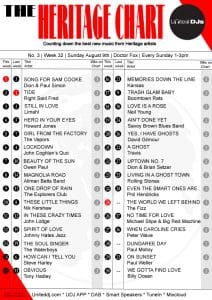
He presents “The Heritage Chart,” which reinforces our freedom to be as creative as we wish without considering orders from above. The chart features artists who have history but because their names and hits lay in the past, find it very difficult to gain exposure on mainstream radio.
We air the show at 5–7 p.m. BST (6-8 p.m. CEST), then again at 11 p.m–1 a.m BST (12–2 a.m CEST or 6–8 p.m EDT) to provide a more convenient listening time for the Americas, Australia etc.
RT: How have you adapted your operational approach in order to work in a cross-cultural environment? Have you come across any obstacles as regards this matter?
Prince: The only obstacles we have are economics. Most of the United DJs team works for the love of it. Many who were divorced from mainstream radio careers as DJ euthanasia took place. Firstly, radio bosses didn’t like paying celebrity salaries. Secondly, they were able to corral new DJs, who were cheaper than the big names with established careers, into programming formats. A majority of our listeners understand English but music speaks to everyone.
Creativity
RT: Do you see any resemblance between United DJs and Radio Caroline or Radio Luxembourg?
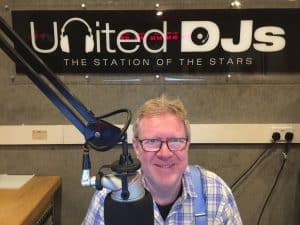
Prince: Of course we do, those were our training camps. The first thing we learned was how to talk to people not at them. We learned to edit tape, make our own jingles — we were in charge of the entire output.
This was unlike the BBC, for example, where DJs had a team of researchers, writers and promo/ad creators who sat on the other side of a glass partition. Steve Wright sounds no different today on BBC Radio 2 than he did when I employed him on Radio Luxembourg.
The only difference is that today he has a team working with him. On Luxembourg, there in the heart of Europe, he sat alone. He delivered his fabulous live show with only his creative brain.
RT: What do you see as the greatest problems or challenges facing radio broadcasters today on both a global and local basis?
Prince: Is there such a thing as local radio anymore? DAB is very expensive for a fledgling like United DJs radio but we have put our foot in the water in Portsmouth and Norwich. The trouble is we get no audience data because we can’t afford to subscribe to OFCOM, the radio authority. As we gain more audience we hope to see sponsorship and advertising income so we can invest more in DAB and marketing. But how do you market a global station with its roots in the U.K.? We constantly adapt and hope the growth in our audience will take care of our future.
Heritage Artists
RT: You recently launched “The Heritage Chart,” which you describe as “a top 30 exclusively containing new music from established artists of old.” Can you tell us about this?
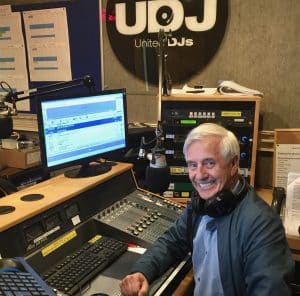
Prince: Mike Read came up with the idea when talking to a frustrated artist who mentioned the words “Heritage Artist.” He brought the idea to me and I said I had the perfect presenter, knowing that Neil Fox was ready to get back in the saddle.
Just a week after meeting and discussing the options we began the project — the idea was too good to dilly-dally. The side issue, which we never anticipated is the reaction from our target heritage artists themselves who are sharing the chart with their own social media.
Dion (with Paul Simon) recorded us a visual, Right Said Fred also. Cliff Richard recorded “Well Done Lads” and Owen Paul immediately joined our FB members page to thank us and communicate with our listeners. This will grow. This is our future marketing potential.
RT: How has the recent health crisis affected your operations?
Prince:I have been self-funding United DJs since launch in April 2018. When the WHO declared the pandemic, nobody wanted to come into the main studio in Slough/Maidenhead. So we set them up with home studios for live remotes. Mike Read, Bob Lawrence, Stuart Busby, Peter Antony are very much live. I am now the only one who uses the main studio.
Our company DMC houses the studio where we have many staff on furlough. Where would we be today without that great invention, the internet? I actually feel when Covid19 is behind us they will probably prefer to stay where they are.
Radio vs. Social
RT: How do you see the future of radio broadcasting?
Prince:Radio has always been your friend, your companion and your reliable source for what you want to hear, whether that’s a music format or a talk show. It’s time for the amateurs to come forth.
Radio’s enemy is social media, Spotify, etc. and that’s the space my 12-year old granddaughter inhabits. It’s where you can see this week’s “Top 100” and understand the kind of music they like. There isn’t one track on this week’s Top 100 that features a Heritage tune and that reinforces the fact that we are doing exactly what we said we would do: Service the older generation. Our target is 40+. The listeners in the 60+ group lived through radio’s golden days, we want to bring it back for them.
RT: What is your advice to radio personalities just starting out?
Prince: Anyone can have his or her own bedroom radio channel now. Just like United DJs, they can broadcast to anywhere in the world. Here is where they can develop their style…is there another Kenny Everett out there? We’d love to find one! In the early 1980s as editor of Mixmag, I forecast that one day DJs would broadcast from their bedrooms to the people in their street. I didn’t think it would take 40 years for it to happen!
RT: Is there anything else you would like to add?
Prince: Like Dion said in his promo, “I still feel relative today.” He’s certainly as creative now and his new album is out of this world. We “older” DJs still feel relative. The industry closed its door on us. We have reopened it.

We invite people to sample our wares on www.uniteddj.com and join our FB page and make like-minded friends. The App is free and available in App stores. Shaun Tilly has a Radio Luxembourg Years program 7–9 a.m. Sundays.
Simon Tate has the Radio Luxembourg Top 20 repeats, two different charts from different years, Sundays 7–9 p.m. BST (8–10 p.m. CEST). I now find that our team has responded to the Heritage tunes and are mixing much more of today’s music with the seven decades behind us.
Also, I see the DAB digital platform replacing local radio stations going forward. There are companies we have spoken to that are establishing the technology for radio stations to split their advertising content to service different DAB areas.