Breaking News

Zeno Media appoints Mike McVay as strategic advisor

UNESCO names RedTech coordinator for World Radio Day 2026

Bauer Media and TuneIn sign ad deal

DRM Consortium responds to Indian regulator’s digital FM recommendation

Beasley Las Vegas stations swap frequencies

WorldDAB and RadioDNS to host Automotive Workshop XXII in Berlin

Podcast Pulse 2025 — Viewers like podcasts

Radio Loma upgrades with AEQ Capitol IP digital mixer

Broadcast Technology Roadshow to visit Media City

Radio TechCon adds sessions on studios, cloud workflows and AI

Wednesday November 12, 2025
Partners
Newsletter
Contact us
About
Edit Content
RedTech RedTech
  • News & Business
  • Strategy & Views
  • Technology
  • Products
  • All stories
  • Contact
  • Advertise
Telos Alliance Shares Omnia Volt Webinar Recording
Trending
Telos Alliance Shares Omnia Volt Webinar Recording

DHD Audio, Societatea Română de Radiodifuziune, SRR, Romania, RomTek Electronics
Featured Technology

Radio Romania builds new studios

DHD RX2 and TX2 consoles to be centerpieces

Featured

Irish radio maintains reach across 79% of the population

The latest JNLR report confirms the enduring popularity of radio in Ireland

Featured Strategy & Views

Visual radio drives Rhodes Music Radio’s studio upgrade

SoundFusion has demonstrated how modern technology can elevate campus radio

Events Featured Products

RCS unveils SelectorCloud and ZettaCloud update at TechCon

RCS says it is "redefining what’s possible for broadcasters”

Featured News & Business

Zeno Media appoints Mike McVay as strategic advisor

Zeno says McVay will strengthen content strategy and drive global audio growth

Featured News & Business

UNESCO names RedTech coordinator for World Radio Day 2026

The event, on Feb. 13, will explore how AI is reshaping radio

  • Contact
  • About RedTech
RedTech RedTech
  • News & Business
  • Strategy & Views
    • Strategy & Views
    • Videos
  • Technology
    • Tech Focus
  • Products
  • Events
    • RedTech Summit 2026
    • Previous RedTech Summits
      • RedTech Summit 2025
      • RedTech Summit 2024
      • RedTech Summit 2023
      • RedTech Summit 2022
    • RadioWeek 2026
      • RadioWeek 2025
      • RadioWeek 2024
      • RadioWeek 2023
    • Global Online Content Series 2024
    • Events
      • IBC2025
      • 2025 NAB Show
      • IBC2024
      • 2024 NAB Show
      • IBC2023
      • 2023 NAB Show
      • IBC2022
    • Events Calendar
  • Publications
  • Advertise
  • News & Business
  • Strategy & Views
    • Strategy & Views
    • Videos
  • Technology
    • Tech Focus
  • Products
  • Events
    • RedTech Summit 2026
    • Previous RedTech Summits
      • RedTech Summit 2025
      • RedTech Summit 2024
      • RedTech Summit 2023
      • RedTech Summit 2022
    • RadioWeek 2026
      • RadioWeek 2025
      • RadioWeek 2024
      • RadioWeek 2023
    • Global Online Content Series 2024
    • Events
      • IBC2025
      • 2025 NAB Show
      • IBC2024
      • 2024 NAB Show
      • IBC2023
      • 2023 NAB Show
      • IBC2022
    • Events Calendar
  • Publications
  • Advertise

Click Here to Subscribe to RedTech's Newsletter

RedTech RedTech
  • News & Business
  • Strategy & Views
    • Strategy & Views
    • Videos
  • Technology
    • Tech Focus
  • Products
  • Events
    • RedTech Summit 2026
    • Previous RedTech Summits
      • RedTech Summit 2025
      • RedTech Summit 2024
      • RedTech Summit 2023
      • RedTech Summit 2022
    • RadioWeek 2026
      • RadioWeek 2025
      • RadioWeek 2024
      • RadioWeek 2023
    • Global Online Content Series 2024
    • Events
      • IBC2025
      • 2025 NAB Show
      • IBC2024
      • 2024 NAB Show
      • IBC2023
      • 2023 NAB Show
      • IBC2022
    • Events Calendar
  • Publications
  • Advertise

Click Here to Subscribe to RedTech's Newsletter

Featured Strategy & Views

U.K. broadcast radio considers the future

by Lawrie Hallett March 25, 2024 8 min read
 U.K. broadcast radio considers the future
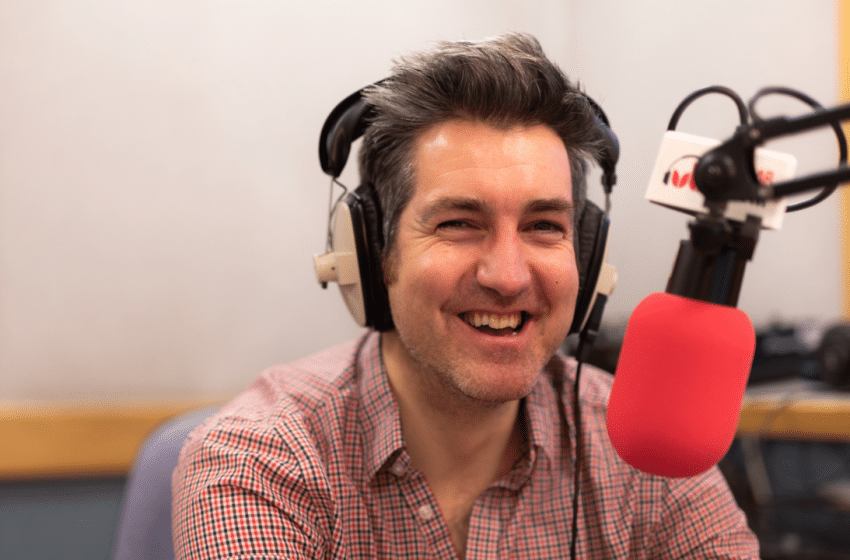
Terry Lee is chair of the Community Media Association.
Print Friendly, PDF & Email

NORWICH, England — Change is in the air for broadcast radio in the United Kingdom, with a slew of potential developments in the offing and likely to impact its future delivery, both in terms of licensing and regarding technical implementations.

In what would be the first significant development in its portfolio of national services since as far back as 2002, the BBC is proposing introducing various new DAB services, using DAB+ at scale for the first time. Commenting on the plans, Lorna Clarke, director of BBC Music, stated that the corporation wants to provide more choices as listening habits change. “Our extensions for Radio 1, Radio 2 and Radio 3 will allow listeners to deep dive into more pop and classical genres and periods of music they love the most.”

Meanwhile, at the other end of the scale, the U.K. Government’s Department for Culture, Media and Sport is considering responses to its consultation on analog community radio licensing. This consultation follows the 2022 Digital Radio and Audio Review, which concluded that analog broadcasting should continue at least until 2030. 

With more than 300 FM and AM community services currently operating and licenses only running for five years before requiring renewal, the fundamental question for regulators and broadcasters alike is how long any such services should continue to operate beyond that date. While opportunities to deliver community-based services via DAB are indeed expanding, it remains unclear what percentage of these stations will be able to access the platform over the coming years.

Protecting community-based services

In addition to considering licensing duration, the consultation also focuses on financing community-based services. In U.K. regulation, there have always been restrictions on the percentage of commercial funding that such stations can generate. Such restrictions are not only designed to protect the interests of the commercial sector, they are also intended to ensure that community stations can maintain a degree of resilience through multiple-sourced funding and not be driven towards the more popular genres of output by commercial pressures.

Chair of the Community Media Association Terry Lee told RedTech, “We favor bringing analog licensing in line with digital licensing in the U.K. so that radio stations are licensed in perpetuity. Such an approach will help provide certainty for stations, volunteers and communities alike.

On the issue of station funding, he suggested that certain restrictions, such as those that limit some stations to a maximum of £15,000 annual advertising and sponsorship revenue, should be abolished. “Those restrictions that remain to protect the character of community radio should be index-linked to avoid the need for a further round of lobbying in the future,” he added.

With more than 300 FM and AM community services currently operating and licenses only running for five years before requiring renewal, the fundamental question for regulators and broadcasters alike is how long any such services should continue to operate beyond that date.

Is there a future for AM?

In terms of transmission, perhaps surprisingly, AM radio still has a role to play and Ofcom is currently consulting on its technical standards. Limited in scope, it does not address the issue of possible increases in field strength to overcome growing levels of electrical interference on the medium frequency band.

That said, it does introduce the possibility of reducing limits on the audio bandwidth of AM transmissions on a case-by-case basis, and provided such changes do not impact on the transmissions of other broadcasters.

Limited audio bandwidth inevitably makes AM services sound muffled and flat compared to their FM or DAB counterparts. The current Ofcom proposal suggests that as overall AM usage declines, it may be possible for some of the remaining services to improve the overall sound of their audio by relaxing such limits because the MF spectrum is becoming less crowded.

Ofcom notes: “It is not clear how many broadcasters might want to make changes to their AM transmitters or whether changes are feasible given constraints in filtering and the bandwidth of transmitting antennas.” Any such changes would also require it to invest resources to investigate the potential impact on adjacent services in the U.K. and revisit international frequency coordination agreements, as all its rights to use spectrum for AM radio assume the current bandwidth restrictions.

It is unclear how much interest there might be in improving the audio quality of AM transmissions, particularly as audiences for MF services continue to decline. Some operators, such as Radio Caroline, might well express an interest, but it remains to be seen if such an approach will be put into practice.

Outside the specifics of radio broadcasting itself but staying with technical policy, Ofcom is also currently consulting on the need to make telecommunications networks more resilient. Resilient telecoms networks are vital to consumers and businesses across the U.K., including the broadcast industry. Radio services increasingly depend on such systems to deliver connectivity and control their broadcast infrastructure, studios, data centers and transmitter sites.

In summary, Ofcom is seeking to ensure that networks are designed to avoid or, where that isn’t possible, reduce single points of failure. It also wants to ensure that key infrastructure points have automatic failover functionality built-in so that, when equipment fails, network traffic is immediately (automatically) diverted to another device or site that can maintain end-user connectivity as seamlessly as possible. Power outages can easily cause significant and extensive service disruption, so ensuring their resilience is an obvious prerequisite for reliable network operations. Round-the-clock broadcasting ensures the availability of backup supplies with a high level of resilience. Perhaps the broader telecoms industry might learn from and adapt some of the established practices of broadcasting, which have served the industry well over several decades.

The author teaches radio and audio at the University of Bedfordshire, and is based in Norwich, U.K.

More stories about DAB

AVT Looks at DAB+ and coms for IBC2023

WorldDAB announces summit date

Bavaria testing novel approach to DAB+

Tags: AM AM/FM Radio BBC DAB/DAB+ FM
Previous post
Next post

Lawrie Hallett

contributor


Most Recent
Featured

Radio Romania builds new studios

November 12, 2025
Featured

Irish radio maintains reach across 79% of the population

November 11, 2025
Featured

Visual radio drives Rhodes Music Radio’s studio upgrade

November 11, 2025
Latest Newsletters

6 Nov 2025 – Music An Asset |Bold Aussie Radio | DRM Drives India

30 Oct 2025 – Africa’s Collective Voice | AI As PD | Bauer Media Group realigns

23 Oct 2025 – Culture Powers Growth | 60 Years Of Innovation | Marconi Awards Winners

16 Oct 2025 – Is DAB+ The Answer? | Saothair Acquires GatesAir | Rethinking The Radio Console

9 Oct 2025 – Campus Radio Project | In The Club | AI In The Driver’s Seat

8 Oct 2025 – RedTech Magazine September/October 2025

2 Oct 2025 – BBC Mobile Tech | NPO Cuts Jobs | Awards Canned

25 Sept 2025 – AI Revisited | Rádio Rock Powers Up | RTL’s Six Of The Best

18 Sept 2025 – IBC2025 Insights | RedTech Award Winners | 2 Minutes Of Tech

11 Sept 2025 – Hearing Children’s Voices | Broadcast Giants Honored | Virtual Mixing

5 Sept 2025 – Read Now — Radio Futures: AI and Radio

4 Sept 2025 – IBC2025 All Change | Incentivizing Digital Transition | Video Takes The Lead


Related Stories for you

Will AI make radio news smarter or lazier?

by Kevin Hilton November 4, 2025 11 min read

As radio broadcasters embrace AI to streamline newsroom workflows, the tension between efficiency and editorial integrity is once again front and center

BBC honors everyday heroes across local radio network

by RedTech Staff October 15, 2025 5 min read

The "Make a Difference Awards" celebrate everyday acts of kindness through radio

Can DAB+ save terrestrial broadcast radio?

by Graham Dixon October 7, 2025 9 min read

DAB+ expansion across Europe and beyond offers hope for terrestrial radio amid largely unregulated competition from digital tech giants

RedTech RedTech

RedTech International SAS
250 bis boulevard Saint-Germain
75007 Paris, France

contact@redtech.pro

Subscribe to our newsletter

About

About Us
Work With Us
Contact Us

Advertising

Advertise

Useful Links

Partners
Newsletter

more

Terms and Conditions
Privacy Policy

latest news

DHD Audio, Societatea Română de Radiodifuziune, SRR, Romania, RomTek Electronics
Featured

Radio Romania builds new studios

Featured

Irish radio maintains reach across 79% of

Featured

Visual radio drives Rhodes Music Radio’s studio

Events

RCS unveils SelectorCloud and ZettaCloud update at

Featured

Zeno Media appoints Mike McVay as strategic

Follow us:

Copyright RedTech International 2025. All Rights Reserved