



Breaking News

U.DAB launches largest small-scale DAB multiplex in the U.K.

CES 2026 highlights AI, standards and manufacturing tech for broadcasters

U.S. at-home listening settles into a new normal

Hamburg Open leads off 2026 shows

Favorite Music Radio Manila upgrades studios with AEQ

CBC/Radio-Canada and Cogeco Media lead Canada Podcast Ranker

Memphis WGKX raises $500,000+ for children’s hospital

Beasley Media Group promotes John Coury to vice president of treasury and corporate controller

ORF pilots DAB+ broadcast after years on the sidelines

Acast acquires Germany’s Wake Word Studios

Wednesday January 7, 2026
Partners
Newsletter
Contact us
About
Edit Content
RedTech RedTech
  • News & Business
  • Strategy & Views
  • Technology
  • Products
  • All stories
  • Contact
  • Advertise
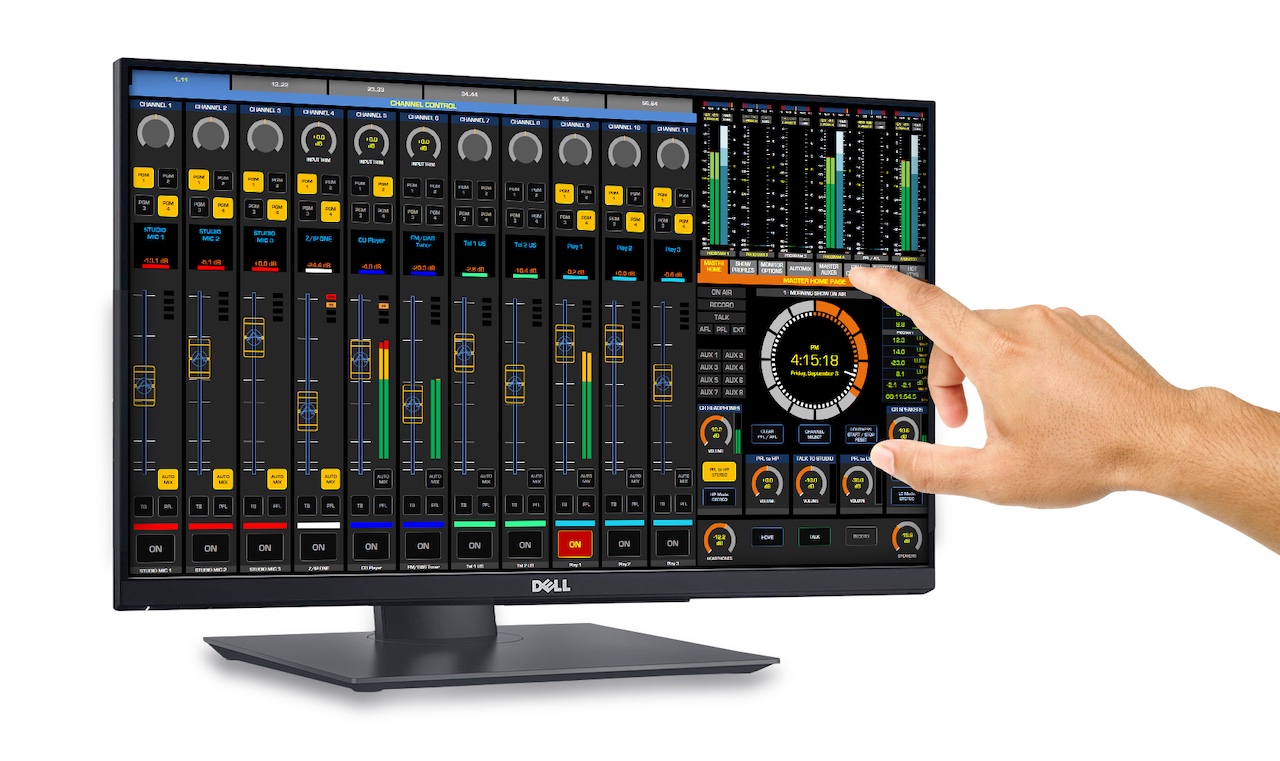
Tieline Releases New Firmware for Gateway, Gateway 4
Trending
Tieline Releases New Firmware for Gateway, Gateway 4

Featured News & Business Technology

U.DAB launches largest small-scale DAB multiplex in the U.K.

The expanded transmitter network supports wider digital radio access in London

Xperi, DTS, AutoStage, automobile, Connected Car
Events Featured

Xperi to highlight DTS AutoStage Video Service at CES

Mercedes-Benz is the latest to sign onto the video service

Beasley Media Group, anniversaries, United States
Featured

Beasley celebrates 65

Founded by George Beasley in December of 1961

Events Featured News & Business

CES 2026 highlights AI, standards and manufacturing tech for broadcasters

The tech-focused January event brings practical relevance for audio and broadcast infrastructure

Featured Strategy & Views

Belgium and Netherlands radio campaigns raise €36 million

The public radio solidarity campaigns delivered record totals

Featured News & Business

U.S. at-home listening settles into a new normal

Edison Research data shows listening has stabilized above pre-pandemic levels

  • Contact
  • About RedTech
RedTech RedTech
  • News & Business
  • Strategy & Views
    • Strategy & Views
    • Videos
  • Technology
    • Tech Focus
  • Products
  • Events
    • RedTech Summit 2026
    • Previous RedTech Summits
      • RedTech Summit 2025
      • RedTech Summit 2024
      • RedTech Summit 2023
      • RedTech Summit 2022
    • RadioWeek 2026
      • RadioWeek 2025
      • RadioWeek 2024
      • RadioWeek 2023
    • Global Online Content Series 2024
    • Events
      • IBC2025
      • 2025 NAB Show
      • IBC2024
      • 2024 NAB Show
      • IBC2023
      • 2023 NAB Show
      • IBC2022
    • Events Calendar
  • Publications
  • Advertise
  • News & Business
  • Strategy & Views
    • Strategy & Views
    • Videos
  • Technology
    • Tech Focus
  • Products
  • Events
    • RedTech Summit 2026
    • Previous RedTech Summits
      • RedTech Summit 2025
      • RedTech Summit 2024
      • RedTech Summit 2023
      • RedTech Summit 2022
    • RadioWeek 2026
      • RadioWeek 2025
      • RadioWeek 2024
      • RadioWeek 2023
    • Global Online Content Series 2024
    • Events
      • IBC2025
      • 2025 NAB Show
      • IBC2024
      • 2024 NAB Show
      • IBC2023
      • 2023 NAB Show
      • IBC2022
    • Events Calendar
  • Publications
  • Advertise

Click Here to Subscribe to RedTech's Newsletter

RedTech RedTech
  • News & Business
  • Strategy & Views
    • Strategy & Views
    • Videos
  • Technology
    • Tech Focus
  • Products
  • Events
    • RedTech Summit 2026
    • Previous RedTech Summits
      • RedTech Summit 2025
      • RedTech Summit 2024
      • RedTech Summit 2023
      • RedTech Summit 2022
    • RadioWeek 2026
      • RadioWeek 2025
      • RadioWeek 2024
      • RadioWeek 2023
    • Global Online Content Series 2024
    • Events
      • IBC2025
      • 2025 NAB Show
      • IBC2024
      • 2024 NAB Show
      • IBC2023
      • 2023 NAB Show
      • IBC2022
    • Events Calendar
  • Publications
  • Advertise

Click Here to Subscribe to RedTech's Newsletter

Featured Strategy & Views

Speaking the same language as your audience is not a given

by Graham Dixon June 27, 2025 8 min read
 Speaking the same language as your audience is not a given
Print Friendly, PDF & Email

LONDON — A recent LinkedIn post from David Fernández Quijada of the consultancy South 180 set me thinking. He asked an extremely simple and pertinent question that could easily be applied across radio or any other medium: Do you speak the same language as your audience? Just a few minutes spent thinking about the different dimensions of that question reveals how multifaceted it is. In Quijada’s post, he used the question to discuss how some broadcasters have launched services in simplified versions of their languages, “in plain language.” 

The most developed example of such plain language seems to come from the Netherlands, where a NOS television bulletin, “Journaal in Makkelijke Taal” (“The News in Simple Language”) has been broadcast every weekday since last September. The NOS website presents the concept and describes the initiative as coming from an obligation on the part of public media to reach the whole community. In its reckoning, about 2.5 million people, one in seven of the Dutch population, could benefit from such a service. Effectively, the intended audience comprises people who have not attained a certain educational level, through disadvantage or learning difficulties, as well as non-native Dutch speakers. The pace is slower than usual, fewer topics are covered, more explanation is given, and the vocabulary is less wide-ranging.  

Quijada can only point to Sveriges Radio as having done something similar in radio. It must be said that those of us with long memories recall that the BBC World Service seemed to speak more slowly and deliberately than domestic services in the past. When you listen to the Swedish transmissions at “Radio Sweden på lätt Svenska” (“Radio Sweden in Simple Swedish”), you get the feeling that you could easily understand, at least if you are familiar with other northern European languages — the words are clearly enunciated and separated, not running one into another in the way you hear in everyday speech. 

Authentic voices

These examples should challenge other radio stations to follow suit. Radio production costs are much less than video, and the very heart of any radio service is spoken language. Surely it is in our interests, whether we are public or commercial, to make ourselves as inclusive as possible across society, along the lines of the NOS statement. The diversity focus has often been on age groups and ethnic diversity, but educational attainment is a dimension that has often been ignored. Notably, Wikipedia hosts a Simple English edition, and the U.K. Government website also demonstrates an underlying concern to ensure that language is not overly complex.  

Often, I have peered into studios around the world to find a youth program hosted by someone who, being honest, is not very youthful!

I want to tackle the opening question — Do you speak the same language as your audience? — in another way. For various reasons, I have been thinking about youth programming recently and the necessity of finding authentic voices for younger age groups. It is probably not ageist to suggest that typically such people, with their fingers on the pulse of contemporary taste, will generally come from a younger demographic themselves, though there might be the occasional exception. Often, I have peered into studios around the world to find a youth program hosted by someone who, being honest, is not very youthful! The new candidates for such roles are probably already in our midst and active if we only cast the net wider to look for them. They will be found on TikTok and YouTube, perhaps creating their own podcasts.

Bolstering social mobility

However, the implications of the opening question are even broader. Here I want to introduce a conundrum which has long concerned me, but for which there is no easy answer. It has to do with social mobility. Long gone are the days when studying at a prestigious university would automatically open all the doors to media employment. At least at the BBC, even an internship must be applied for in the same manner as someone seeking an actual job. However, obstacles remain when seeking to mirror the contours of society in the personnel of radio or other media organizations. People from marginalized and disadvantaged groups may not see prestigious companies as prospective employers. They may well lack the aspiration to apply. From outside, it is true, the work environment may seem worlds away from their own day-to-day experience. 

One relatively unintrusive measure to understand diversity of background is whether someone’s parents had a university education. And herein lies the challenge: whatever someone’s background, if you give them a reasonably stable, decently remunerated job and provide the circumstances to mix with motivated people from a wide variety of backgrounds, it often follows that their relationship with their origins becomes more remote. It may well become more difficult to identify with where they came from, as they blend in with the broader organization. For this reason, local and community radio is more important than ever since it does, to some extent, keep people anchored in their localities and in touch with cultures beyond the urban centers. In an increasingly polarized world, keeping communication channels flowing and connecting people with different life experiences is more important than ever. 

Society cannot function effectively if we divide into those who consume high-quality media and another faction who have their prejudices confirmed through social platforms and conspiracy theories. In such a scenario, there is no point of contact, no common ground for dialogue. How can we ensure we speak the same language as our audiences? Extending that further, we should really ask whether we speak the same language as those who are not yet our audience or those who have already tuned out.

The author was head of Radio at the EBU until 2020, and before that, managing editor of one of the BBC’s national stations. He currently advises media organizations.

This article originally appeared in the May/June 2025 edition of RedTech Magazine.

These stories might interest you

KEXP redefines live radio with Myriad versatility

AI now offers instant audio for everything

Radio’s primary task for 2025

Tags: Dixon's Corner RedTech Magazine May/June 2025
Previous post
Next post

Graham Dixon

author


Most Recent
Featured

U.DAB launches largest small-scale DAB multiplex in the U.K.

January 6, 2026
Events

Xperi to highlight DTS AutoStage Video Service at CES

January 6, 2026
Featured

Beasley celebrates 65

January 6, 2026
Latest Newsletters

30 Dec 2025 – The Quiet Engineering Behind Radio’s Next Phase

18 Dec 2025 – Radio 2 Winter Heat | Radio’s Human Advantage | Mediaset Muscles Up

11 Dec 2025 – Growing Nordic Radio | Lighting Up Christmas | A Commemorative Stamp

10 Dec 2025 – Meet The Solutioneers 2025/2026

4 Dec 2025 – Africa IP Shift | MPW Scholarships | LATAM Listener Trends

2 Dec 2025 – RedTech Magazine November/December 2025 Is Here!

27 Nov 2025 – Bright Color Radio | Win For Bauer | Radio Still On Receivers

20 Nov 2025 – Football-Mad Radio | 30 Under 30 Talent | Berlin Online Listening

13 Nov. 2025 – AI Radio News | Debating Radio’s Impact | Immersive Streaming Audio

6 Nov 2025 – Music An Asset |Bold Aussie Radio | DRM Drives India

30 Oct 2025 – Africa’s Collective Voice | AI As PD | Bauer Media Group realigns

23 Oct 2025 – Culture Powers Growth | 60 Years Of Innovation | Marconi Awards Winners

16 Oct 2025 – Is DAB+ The Answer? | Saothair Acquires GatesAir | Rethinking The Radio Console

9 Oct 2025 – Campus Radio Project | In The Club | AI In The Driver’s Seat

8 Oct 2025 – RedTech Magazine September/October 2025

2 Oct 2025 – BBC Mobile Tech | NPO Cuts Jobs | Awards Canned

25 Sept 2025 – AI Revisited | Rádio Rock Powers Up | RTL’s Six Of The Best

18 Sept 2025 – IBC2025 Insights | RedTech Award Winners | 2 Minutes Of Tech

11 Sept 2025 – Hearing Children’s Voices | Broadcast Giants Honored | Virtual Mixing

5 Sept 2025 – Read Now — Radio Futures: AI and Radio

4 Sept 2025 – IBC2025 All Change | Incentivizing Digital Transition | Video Takes The Lead


Related Stories for you

Can DAB+ save terrestrial broadcast radio?

by Graham Dixon October 7, 2025 9 min read

DAB+ expansion across Europe and beyond offers hope for terrestrial radio amid largely unregulated competition from digital tech giants

CGI dira aims for modernity

by RedTech Staff August 28, 2025 3 min read

The company says dira OnAir Player is a versatile playout controller

How station innovators are winning with virtual mixing

by Marty Sacks August 28, 2025 8 min read

Moving from traditional hardware consoles to virtualized systems can feel like a big change, but the rewards are worth it

RedTech RedTech

RedTech International SAS
250 bis boulevard Saint-Germain
75007 Paris, France

contact@redtech.pro

Subscribe to our newsletter

About

About Us
Work With Us
Contact Us

Advertising

Advertise

Useful Links

Partners
Newsletter

more

Terms and Conditions
Privacy Policy

latest news

Featured

U.DAB launches largest small-scale DAB multiplex in

Xperi, DTS, AutoStage, automobile, Connected Car
Events

Xperi to highlight DTS AutoStage Video Service

Beasley Media Group, anniversaries, United States
Featured

Beasley celebrates 65

Events

CES 2026 highlights AI, standards and manufacturing

Featured

Belgium and Netherlands radio campaigns raise €36

Follow us:

Copyright RedTech International 2026. All Rights Reserved