





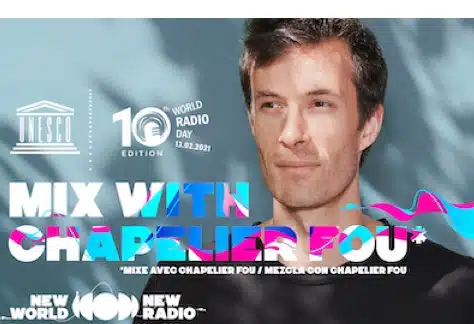

Under the theme “New World, New Radio,” World Radio Day 2021 pays tribute to the medium’s ongoing capacity serve its community during the best, and the worst of times — this last year being no exception. RedTech spoke to Chief, Media Development and Media and Information Literacy at UNESCO, Mirta Lourenço, about radio’s many attributes, the evolving role it plays in humanity, and the importance of maintaining its presence in order to ensure fair access to information and freedom of expression.
RedTech: What is this year’s World Radio Day theme and why?

Mirta Lourenço: This year UNESCO is celebrating World Radio Day’s 10th anniversary. The 2021 theme, “New World, New Radio” recalls how this medium is part of humanity’s history by following the various developments in our society and adapting to contextual needs. As the world changes, so does radio. For example, during the COVID-19 crisis, radio has made it possible to ensure teaching and learning, to connect people, to fight against disinformation, and to promote social distancing and other ways for people to stay as safe as possible from the virus.
“New World, New Radio” is therefore an ode to the services radio brings to humanity. It’s a tribute to the medium’s capacity for providing a public service, whether through public, community or private broadcasting. Being accessible anywhere and quickly, radio reaches a broad and diverse audience in real time and functions as a public arena. Radio does not only offer music, news and advertising — but also cultural broadcasts, education, companionship, emergency announcements, communication during disasters, etc.
Therefore, the 2021 three sub-themes that illustrate this year’s overall theme of “New World, New Radio” are: Evolution, Innovation and Connection.
RedTech: What are UNESCO’s goals in organizing such an event?
Lourenço: It’s more than an event, or it is several events around the world, all of them celebrating radio. It’s actually a United Nations-proclamation, and at the U.N. we designate specific dates to mark particular topics so as to raise awareness on objectives of the organization.
WRD was originally declared by UNESCO and subsequently adopted by the UN General Assembly. UNESCO stands for freedom of expression and access to information, raising awareness on the importance of media diversity and pluralism. The objective of WRD is to encourage decision makers to establish and provide access to information through radio, as well as to enhance networking and international cooperation among broadcasters.
UNESCO leads the celebration and chairs the WRD Committee, which is composed of regional and international broadcasting organizations.

RedTech: This year WRD celebrates 10 years. How has WRD evolved since its launch?
Lourenço: WRD has evolved in terms of ownership of the day: It’s clearly a day for radio stations, and I believe that even if UNESCO stopped observing the day, radio stations worldwide would continue celebrating WRD by themselves now. UNESCO took the Day to a sustainable level. In some countries, more private radio stations should still take ownership of this day.
RedTech: How has the COVID-19 crisis impacted this year’s plans and also the participation of radio stations in WRD?
Lourenço: WRD’s strategy has always been to offer quality material to help radio stations around the world participate in the celebration. A digital strategy has been strongly implemented, especially during these new uncertain times, but this year many radio stations, especially smaller ones, are having difficulties to overcome financial loss and risk going bankrupt due to the recession. I hope they find the means and spirit to celebrate and shine a light on the incredible services they have been providing populations during the pandemic.
RedTech: Over these last few months, radio has proven once again to be an essential service. How can WRD help broadcasters connect with their listeners during these challenging times?
Lourenço: Radio has been essential in times of COVID-19 and is our best ally in guaranteeing the right to information. The COVID-19 pandemic strongly impacted the cultural sector. Artists around the world, most of whom were already working parttime, on an informal basis or under precarious contracts prior to the pandemic, are struggling to make ends meet. “New World, New Radio” and the resilience of radio can promote the return of culture in our lives to ensure the continuity of conversations and to respond to heritage and creativity disruption challenges.
The COVID-19 outbreak is also a major education crisis. Therefore, it has been important to promote access to education by means of radio. In many parts of the world, the digital environment is still not easily accessible, and distance learning is only possible through the airwaves. #LearningNeverStops is one example of an UNESCO initiative to bring awareness to this inequality.
Radio can also connect with its listeners in dialogue to combat discriminatory discourse and conspiracy theories. Furthermore, radio can counter the reigning disinformation by providing audiences the necessary elements required in order to assimilate information critically and to think before sharing or spreading rumors. Radio can also accompany parents and guardians to help children distinguish facts from opinion, understand how information shapes their attitude and behavior, and identify quality journalism from an early age. There has been a surge in children’s radio programs during 2020, both educational and entertainment ones.
RedTech: What are some of the other initiatives UNESCO is doing to help support radio stations provide programming during the health crisis?
Lourenço: UNESCO and radio stations across the world countered disinformation. UNESCO produced a series of audio messages for radio professionals, which are available for use copyright-free. They exist in more than 12 languages. Presently, UNESCO together with the World Health Organization is also producing audio messages on preventive measures, which will also be offered free of charge to any radio station wishing to broadcast them. They tackle topics including vaccination, sanitary measures and travel. And last but not least, UNESCO is preparing capacity-building resources and instances to give radio stations the know-how and ability to set up “Stay-at-Home Radio”, so that they can continue broadcasting at professional quality despite confinement measures, as well as counter costs for maintaining studios.
RedTech: In general and from UNESCO’s perspective, do you think this health crisis will have negative consequences for the future of community radios?
Lourenço: Community radios give communities a voice, providing for closeness and interaction. They usually operate with scarce means and, indeed, the pandemic may threaten their existence. And yet, community radio stations are community-owned and thereby dear to populations. These radio stations are able to broadcast in vernacular languages and are sometimes the main media people turn to for information. So, they are essential for prevention and protection against COVID because it is the media that communities trust. There is a dire need for them to survive the financial crisis!
Promoting sustainable funding models for community radios has always been at the core of UNESCO’s action with duty-bearers to help them develop measures favorable for this type of media. It could be at least some public funding to community broadcasters, or lift limitations to funding from foreign sources, or indirect support for community broadcasters through waivers — helping them earn revenue, reducing license and frequency fees, assistance for equipment purchase or maintenance and tax considerations. Simply because to strengthen democracy we need pluralistic media landscapes where nonprofit media exists together with commercial and public service media.
The coronavirus situation may lead many of these small radio stations to close, affecting pluralism and consequently democracy. Dedicated work with duty-bearers and right holders are foreseen in this vein in the Gambia, Mongolia, and South Sudan. Some progress can be mentioned for Burundi and Nepal, where these issues are already being considered.
RedTech: Describe UNESCO’s effort to develop awareness of WRD around the world.
Lourenço: WRD is, first and foremost, a celebration of the first electronic medium that has, over the decades, provided services to humanity.
WRD logically aims for radio coverage in preference to press coverage. Nonetheless, UNESCO’s strategy for WRD receives some press coverage every year around the world. There is not a continent without representation. We work in partnership with all regional and international broadcasting organizations, so as to align to their objectives too.
UNESCO offers radio stations, and wider to governments and the civil society, free resources, audio clips, short videos, stories and testimonials in a visually attractive dedicated website. The statistics show that approximately 25% of users are return visitors, meaning that key stakeholders return to the site on numerous occasions.
And every year when visitors land on the page, they stay. WRD has a good average of page view and people’s sessions last long, so users have a great interest in the content and truly explore the worldradioday.org site. Major global influencers usually make public statements aligned with our messages for WRD.

RedTech: What are you doing to encourage generalist and musical radio stations (therefore outside community radios) to participate in this event?
Lourenço: We always encourage generalists and musical stations, but even other types of radio broadcasters, for example sports and shortwave stations have been active celebrating WRD each year. For the first time this year, French artist Chapelier Fou has created an original soundtrack based on recordings sent to us by radio stations. We asked the stations to send sound clips, excerpts from programs, burst of laughter, jingles, leitmotivs, slogans, quotes, studio noises, any theme-related audio that they want us to add to the soundtrack.
We also invite radios to produce work and to be creative for WRD. Radio can participate by producing podcasts, interviews, organizing vox pops and open studios to their listeners. Each year we suggest 13 ideas to celebrate de 13 of February, which anyone can find on our website worldradioday.org.
Often WRD is celebrated by other than radio stations as well, e.g. libraries, schools, scouts, university radio stations, etc.
RedTech: What actions would you like radio organizations to take in the future?
Lourenço: If we take a global perspective, there are still some key policy issues to tackle. In some countries, this may even come to formal recognition of community broadcasting, tailored licensing systems, or reserving spectrum for radio.
Moreover, media in general is being impacted by digitization. The switchover from analogue to digital transition has been slower for the radio sector and it obviously has costs. Not only for the radio stations but also for the audiences, since they have to count with digital receiving radio sets.
Apart from this, convergence is a challenge, since it pushes radio broadcasters to distribute content online so as to retain their listeners: offer podcasts, online streaming, increased listener interaction, social media presence, etc. – thereby increasing use of bandwidth and its charges but also requiring a new knowhow from them.
Increased dialogue among radio organizations and authorities could help devise ways to ensure both financial and technical support in the digital environment. We do not have to lose sight of the horizon, and keep in mind the long-term view of adequately serving populations, ensuring new ways to access information and freedom of expression.
Last but not least, in this climate of disinformation, broadcasters are increasingly helping their listeners navigate the abundance of information through specific media and information literacy initiatives. These initiatives concern enabling discerning information, developing sections or programs that fact-check public figures’ statements, acknowledging audience diversity in their staffing and editorial content, raising transparency of their operations, explaining their work to their listeners, helping people tell their stories through the radio station’s platforms, or even straightforwardly broadcasting media and information literacy programs. In this way, radio stations establish themselves as a trustful source, a good brand of journalism, and gain the loyalty of their audiences while helping combat disinformation. They actually foster the trust in media in general.
RedTech: Are you also targeting podcasters and streaming services with WRD or only traditional radio broadcasters?
Lourenço: WRD is made for every radio station and enthusiast, even amateur radio broadcasters, wherever they are in the world. Our goal is to be as inclusive as possible, and to encourage all to participate, no matter the size, platform used or audience segment.
Furthermore, through innovation, one of this year’s sub theme, new ways of listening to radio emerged in the past few years, such as podcasting. Radio is the success story of information and communication technologies. It never went rusty — it instead adapted and multiplied its presence, being accessible everywhere, to everyone, on varied devices and still with real time breaking news. Don’t your days still begin or end with radio?